History of the BISEL project

GREEN Pannónia Foundation


The GREEN Pannónia Foundation is the Hungarian representative of the  Global Rivers Environmental Education Network. GREEN  is an innovative and action-oriented approach to education based on an original interdisciplinary watershed education model. The GREEN programme connects the practical environmetal science with language learning, biology, chemistry and global communication. In the GREEN projects students participate in real-life situations, investigating their local watersheds.

GREEN works closely with educational and environmental organisations, community groups, businesses and government agencies. GREEN promotes educational awareness, particularly within the scope of environmental studies, by coordinating local, regional and international projects. 

The educational programme of the GREEN consists of two main parts:

-monitoring the water quality changes (chemical and biological methods)
-interpretation of changes and tendencies and intenational data exchange through the Internet

The programmes are developed to foster environmental ethics, sensitivity and respect: thus contributing to a more caring and peaceful world.

The GREEN Pannónia Foundation works together with scientific institutions (eg. Eötvös Lóránd Geophysical Institute), professional organisations (Associaton for Hungarian Vocational Education), companies (pl. MEFA Rt, Merck) in order to support the members' effort in the local environmental education and in the protection of the local watercourses. An other important activity of the GREEN is the organization of crosscultural partnership among the members.

Borián György, the GREEN Country Coordinator for Hungary is member of the GREEN Europe Board.

Some relevant activities of the GREEN Pannónia Foundation:

- Publishing the Hungarian version of the  I. volume of the GREEN Field Manual together with the Balaton Academy (500 copies) in 1997. 
-   In May, 1997  together with the Dutch JVM (Youth for Future) actiongroup we organised and carried out  the investigation of the environmental state (air, groundwater, noise, Almás-river) of a small Hungarian town, Szigetvár. In this project the teachers and students of the Technisch Lyceum Eindhoven, Than Károly Secondary School, Budapest and the  Dráva Völgye Secondary School, Barcs participated. We published more studies about the results.
-     Based upon this project we prepared a project-orientd teacher handbook (titled: Investigation of the state of the environment) for the National Institute of Vocational Education. 
-     In 1996-97 we set up a monitoring system on the Almás creek upon the request of the Association of Dél-Zselic Settlements. 5 primary schools participated in this project. 
-       In 1998 the GREEEN Pannónia organised the programmes of the Sasrét Forestry School of  Mecsek Forestry Co. (MEFA Rt). 
-       Between June 15-19, 1998. we organised the teacher training seminar in Barcs  for the  National Institute of Vocational Education and the Associaton for Hungarian Vocational Education in order to introduce the GREEN programme. 70 teachers of environmental science participated in this seminar. 
-     Since 1999 the GREEN Europe supports the National Environmental Science Competion for Secondary Schools. The GREEN Europe awarded international certificates to the first three students in order to help their further studies in whole Europe and the GREEN Pannónia presented valuable prizes for them. 
-    The GREEN Pannónia is represented by Borián György in the Comenius Freshwater Network, in a Comenius 3.1. programme
-     In July, 1999 the GREEN Pannónia in cooperation with the Széchényi Ferenc Gimnázium, Barcs represented Hungary in the 1st European Water Parliament in Espalion, France.
-    The GREEN Media Workshop (a working group in the GREEN Pannónia) creates websites, CD-ROM and promoting materials for NGOs and companies in the field of environmental and nature protection in all Europe.

- On April 29, 2000 we opened the Drávatamási Ecocentre which was built in the frame of a cooperation agreement with the Danube-Drava National Park.

Nieuwe Media School 


General goals and activities 


The Nieuwe Media School (New Media School) has as objectives to stimulate, to enhance and to help to realize the educative use of new media in society and education in all its forms (school, training, remote learning, self study).

Therefore NMS organizes symposiums, study days and courses on this subject or cooperates in activities and projects of other organizations or firms which will promote the use of ICT in an educative context.
The NMS also cooperates with e.g. publishers, in producing CD-ROMs or Websites with educative content and distributing them among the target groups.

Target groups

The NMS addresses first of all teachers and instructors in education and training, especially teachers in all levels of education. Other organizations (e.g. user groups, schools) and companies (e.g. educative publishers) will be turned to as well for sensibilization actions and cooperation.

Strong Points

The NMS has most experience in accompanying, motivating and training teachers in the use of computer-applications, in analyzing educative software and in making and helping user groups.

The NMS has a pesonal contact with teachers and haedmasters of secondary and higher schools from almost all EC countries. In this way it has a quite good impression of education in those countries.

European experience

NMS has been involved in European Education Programmes for years (e.g. Euro classes, Multilateral School Partnerships. Lingua, Leonardo and Comenius)
The NMS has been involved as partner in the following projects:

- ARTLINKS - Project of European Programme INFO 2000 (Flemish, Greek and German partners)          
- BISEL - Comenius 3.1.programme (partners: University Ghent and Greek, Norwegian, and Holland schools) 
- New Media in Education - EFRO
- Netd@ysEurope 1997 - Comenius project: The Philosophers Hotel   
            (partners: Belgacom, Apple Benelux, Facultés Universitaires de Mons)
- ReLaTed (Remote Learning and Trainer Development) - Leonardo project
- PETRA (Pedagogical Training) - Ten-Telecom programme   
             (partners: Apple Computer Europe, publishing house Averbode, Media et Animation,
             9 universities and schools from all Europe)

BACKGROUND OF THE  B&I 2000

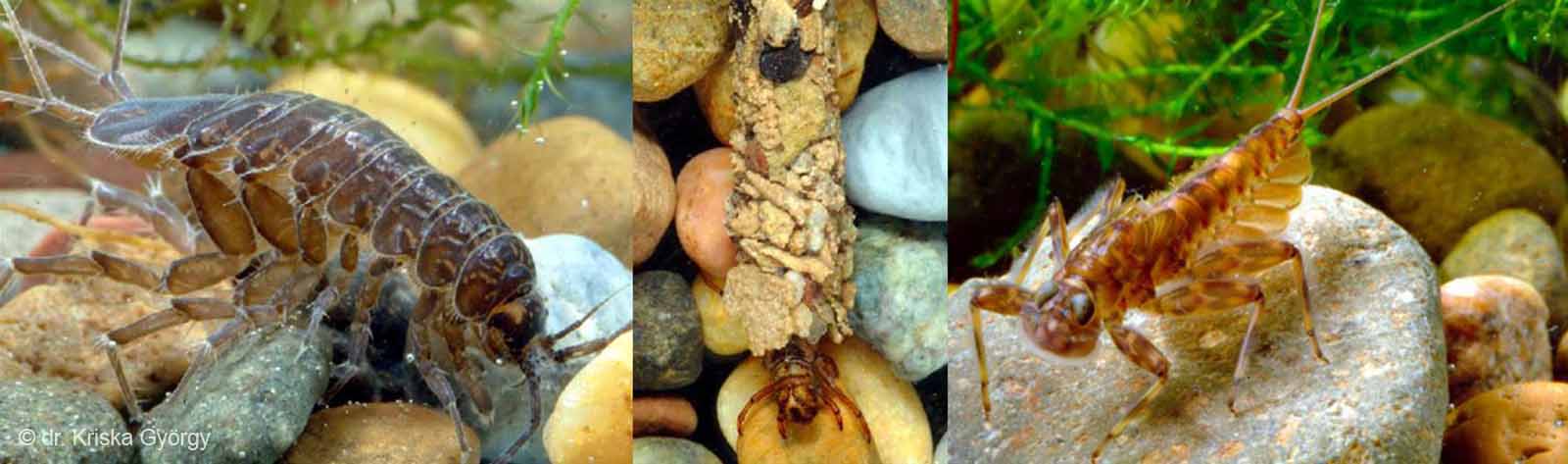
The participants (especially secondary school teachers) of the GREEN Pannónia's programmes expressed their need for gaining a deeper insight into the GREEN project. The main reasons: 1. the project education (particularly in out-of-school education) is not known by the Hungarian teachers, 2. bioindication (using macroinvertebrates) is not used in the secondary education level. 
However, the National Environmental Education Strategy (NKNS) strongly promotes the interdisciplinary projects, especially out of the schools. It also emphasizes the emotional aspects of the real-life situations.

OBJECTIVES OF THE B&I 2000

1.Cooperation among educational and environmental organisations, community groups, businesses and government agencies in order to improve the Hungarian professional training.

2.To introduce a low-cost, practice-oriented interdisciplinary project (bioindication) for the Hungarian teachers of environmental science.

3.To prepare the Hungarian teachers for telecommunication on the Internet in order to be able to connect their own schools and students to European networks. 

4.To introduce the organization and social aspects of European projects to the Hungarian teachers. 

5.To create a network among the institutes using the bioindex and to link this network to European projects.

6.To introduce the use of Internet in the environmental education. 

7.Testing of the existing educational materials in Hungary. To adapt the GREEN Field Manual II. volume (dealing with bioindication) to the Hungarian circumstances.

8.To see that the results of bioindication can also be compared at European level. 

9.To improve the vocational language knowledge of the participants in the field of bioindication and telecommunication.

WHAT NEEDS DOES THE PROGRAMME REACT?

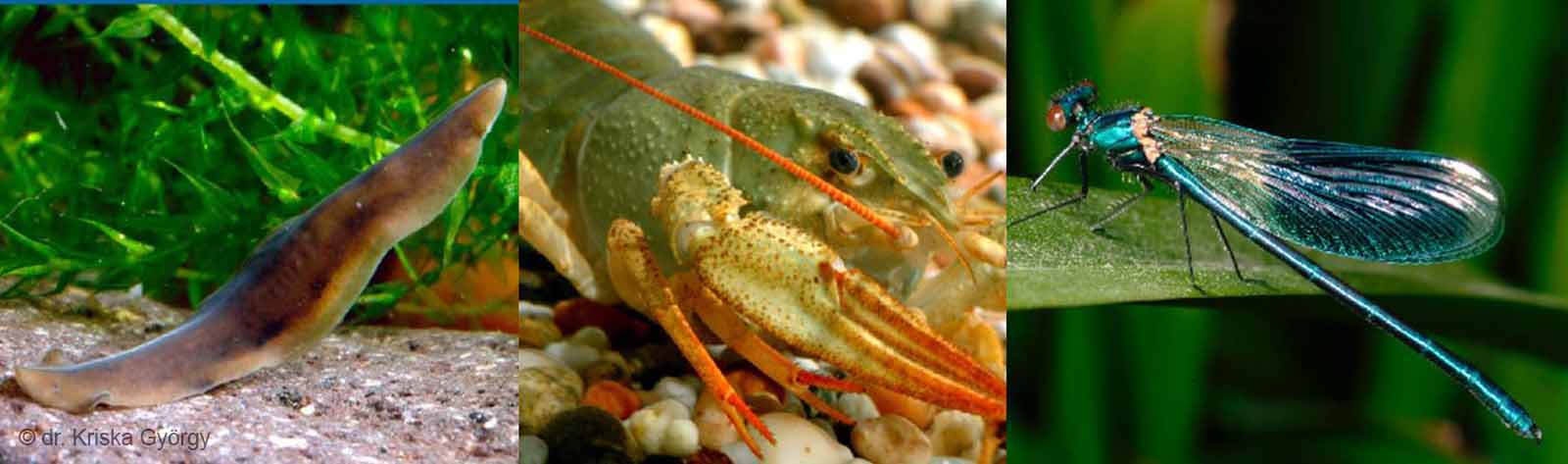
1.The biotic index (BI) is a biological water quality assessment method for water courses. It is a simple method that permits one to gain a clear insight into the ecological quality of water courses with very limited means. Biological water quality assessment is a valuable supplement to chemical water quality assesment systems, scientifically as well as educationally. The Belgian variant (Belgian Biotic Index, BBI) was et up an drepeatedly tested by a cooperationm of several laboratories. Since 1984 it is official standard method for biological water quality assessment in Belgium, at least all over Europe. 
In the educational field the BI integrates in an active way (field work) the biology lessons of classification and ecology: the determination of the macro-invertebrates is based on the principles of the biological classification system and its interpretation in terms of water quality is connected with human influences on the environment. When the assessment of the biotic index is combined with chemical water analyses, clear conclusions can (mostly) be drawn concerning the cause of the pollution and thus we have an integration of the biology and chemistry lesson.

2.Most of the Hungarian teachers are not able to use the Internet in an efficient way. Therefore they don't use this tool in their own subjects and in the field of environmental education. One of the most important goals of this project to dissolve the barrier "I am not able to learn this" . This project provides a lot of time for practice. The overloaded Hungarian teachers don't have  freetime to practice it in schooltime.

3.Probably the most important goal of this project is to prepare the Hungarian teachers together with the other partners of the vocational (environmental) education to give this knowledge to the students in the most efficient way. That's why we put such a great emphasis on the project method!

PREPARATIONS

In October 1998  Borián György and  Hári Ferenc represented the GREEN Pannónia Foundation at the GREEN Europe Conference held in Gent. One of the programmes was the introduction of the simplified Belgian Biotic Index, called  BISEL. The lecturer, Danny van der Veken  organized a field trip to show the use of the BISEL with his students. We immediately recognised that method would be perfect also in Hungary. We contacted Danny and after long corresponding we met him again in January 1999 in Belgium at the launch of   the Comenius Freshwater Network. Then we talked with Willy Aerts, the director of the Sint-Dimpnalyceum about the possibilities of the  BISEL adaptation.  As both parties showed deep interest we determined to start a common EU project for Hungarian teachers. Due to the characteristics of the project we applied for the Leonardo Programme. 

Meanwhile the BISEL project got Comenius 3.2 support to organize an in-service teacher training in Greece and the organizers Willy Aerts, Danny van der Veken and professor Niels de Pauw invited us. By the financial support of the Hunagrian Tempus Public Foundation Borián György and Borsos Sándor could participate in this one-week course. This practical course was the professional basis of the B&I 2000 project. This seminar was a great input into the successful organization of the Hungarian project.
A lot of people worked hard in the B&I 2000 Leonardo application.  By the help of  Ms. Kohl Ágnes,  president of the Environmental Department of the Association of  Hungarian Vocational Training a lot of schools got the possibilities to join the project. By the deadline of the Leonardo application about 40 teachers expressed their willingness to participate and their schools' support.  
At the end of June 1999  we got the news about our successful application. Unfortunately, the burocracy in Brussels changed our project period so many of the originals applicants couldn't take part in the project.
The participants met three times in the  Mechwart András School.


  Programme of the meeting 1
  October 30, 1999  Sat 10:00

1.Greetings
2.Introduction of the partcipants
3.Introduction to the GREEN  + videofilm (17’) –  slides of Espalion (10’)
4.Introduction of the B&I 2000 Leonardo programme, introduction of the  Powerbook 540 laptop
5.The frame of the  B&I 2000 website
6.Homework: create e-mail addresses, sending mails, fill in the profile sheet
7.Individual tasks: – translation, videofilm editing, website, etc.
8.The products of the porject: network, BI map, publishing the GREEN-BISEL manual, development of the disc and the Swedish plastic shhet, CD-ROM
9.Introduction to the Comenius Freshwater Network  – possibilties
10.Introduction of  the Water Solidarity programme
11.Questions, problems


 Programme of the meeting 2
  January 02, 2000  Sat 10:00


1. Greetings. Introduction of the new participants
2. The present situation of the  B&I 2000 
3.  The dissemination of the yellow book:  checking the profile sheets
4. Introduction of the website: www.nexus.hu/bi2000
5. Lecture on the  BISEL  - Borsos Sándor 
      - slideshow on the Greek course
      - calculation of an example
      - homework - solution accepted by only e-mail
6. Try-out of the website      
7. Free discussion. Problems 


  Programme of the meeting 3
  March 11, 2000  Sat 10:00


1.Greetings
2.Data control: passport number, address, etc.
3.Undersigning of the contract
4.Departure time (accommodation for Thursday evening)
5.Presentation about the preparation in Belgium - Borián György: dissemination of the leaflets of the Sunparks and de Goren ecocentre
6.Dissemination of the Hungarian version of the  BISEL Manual: "az öreg Tisza felett..."
7.The BISEL videofilm
8.Personal tasks:  video, daily report, etc
9.Homework assessment and an other example
10.Travel pack: rubber boot,  presents to the hosts, etc
11.Free discussion. Problems. 

 
PROGRAMME IN BELGIUM
Friday 31 St of March Brussels, Leuven, Mol


9.30 Arrival at the airport
10.00 Visit at the centre of Brussels
11.00 Visit to the Belgian Parliament : guided tour and meeting with some
members of the Parliament (subject: the Tisza-pollution)
13.00 Lunch
15.00 Arrival in Leuven: Guided Tour
City-walk (Beguinage, Town Hall, Church, University, Library)
17.00 Visit at the Hungarian College
17.30 Dinner
20.00 Arrival at Sunparks "Rauwse Meren"


Saturday 1 St of April Mol


10.00 Guided Tour on bicycle in the neighbourhood:the "Lakes district"
Guide: Mr. S. Luyten, major of Mol
12.00 Reception by the major and lunch in the Eco Centre "De Molse Goren"
14.00 Start of the B& I Seminar
- Aims and working methods of the seminar
- Presentation of trainers and participants
- Distribution of the personal laptops
15.00 Introduction in the use of the Powerbook 540: on hands workshop
16.00 Coffee Break
16.30 Introduction in the use of Claris Works: on hands workshop I
18.00 Question Time
20.00 Dinner

 
Sunday 2 nd of April Bruges


8.30 Departure of the coach to Bruges
10.30 Arrival and visit to the city of Bruges
Guided Tour and free City Walk
Lunch and Dinner
19.00 Departure of the coach to Mol

 
Monday 3 th of April Turnhout

8.30 Departure of the coach to Turnhout
9.15 Arrival at Campus Blairon Presentation of the Strategic Team for the Kempen
11.00 Cyberskills: ICT sensibilisation training
13.00 Lunch
14.00 Cyberskills: ICT sensibilisation training
16.30 Departure of the coach to Mol


Tuesday 4 th of April: Antwerp

8.30 Departure of the coach to Antwerp
Arrival at the House of the Province Guided Tour and reception by Mr. J. Geuns, deputy
12.30 Lunch in the House of the Province
Citywalk in the historical center of Antwerp Town Hall, Market Place, Cathedral, Schelde
15.00 Guided Museum visit: House of Rubens
16.30 Free time
18.00 Dinner
19.30 Departure of the coach to Mol

 
Wednesday 5 th of April: Brussels

8.OO Departure of the coach to Brussels
10.00 Arrival at the Botanic Garden of Meise
Guided tour and visit of the Water Treatment Station
13.OO Lunch at the restaurant of the Erasmus College
14.30 Casestudy on the Tisza-pollution in the Erasmus College
- Intervention by Mr G. Baranyai of the Hungarian Mission
- Talk with Mr Juhász Gergely, director of Hungarian College, Leuven
17.00 Citywalk in the historical centre of Brussels (Market Place)
18.30 Departure of the coach to Mol

 
Thursday 6 th of April: Mol

9.00 Training (laptops) Workshop II
11.00 Claris Works:ICT Workshop III
14.00 Departure of the coach to Isotopolis
Isotopolis: Nuclear WasteTreatment
18.00 Freetime at SunParks

 
Friday 7 th of April: Netherlands

8.OO Departure of the coach to Vlissingen
1O.OO Arrival at Hogeschool Vlissingen
Presentation of the watermanagement system in Holland
Visit at the watermanagement labors
Work with dutch students
12.3O Lunch at the restaurant of the College
14.OO Departure to Neeltje Jans"
Expositioncentre of the Dutch dikes-system
How Holland won the waterbattle
17.3O Departure of the coach to Mol

 
Saturday 8 th of April Turnhout

9.OO Departure of the coach to Turnhout
9.3O Guided visit at the Castle of Mary of Hungary
11.OO Guided visit at the Beguinage
11.OO Meeting the Major at Townhall
12.OO Lunch
13.3O Cyberskills: ICT-training in the use of BridgEd
A web based powerful learning environment for life long learning
15.3O Coffee Break
16.OO Cyberskills: ICT- hands on training in the use of BridgEd
17.3O Departure of the coach to Mol

 
Sunday 9 th of April Mol

9.3O Departure of the coach to the abbey of Postel
1O.OO Visit at the Church and the abbey
12.OO Departure of the coach to SunParks
Free time

 
Monday 10 th of April Ecocentrum De Goren, Mol
 

09:00 Lesson: Macroinvertebrates - Danny Van der Veken - slides & transparencies
11:30 Lesson: Water Quality Assessment Danny Van der Veken - transparencies & video
12:30 Lunch - sandwiches
14:00 Field work: Determining the BISEL Biotic Index of the river Vleminckxloop
centre for processing, identification and calculation
16:00 Break - coffee & tea
16:30 Discussion and conclusions
17:30 End

 
Tuesday 11 nd of April University Gent
Laboratory for Aquatic Ecology and Ecotoxicology

08:00 Departure of the coach at Sunparks Kempense Meren
10:00 Arrival in Gent - break: coffee & tea
11:00 Introductory lesson: Biological Water Quality Assessment
The BISEL Biotic Index by prof. Niels De Pauw
12:30 Lunch - students’ restaurant Overpoort (plat du jour)
14:00 Lesson: Recognising Macroinvertebrates & Presentation of Case Study
Niels De Pauw
17:30 Return by coach to Mol

 
Wednesday 12 th of April University Gent

08:00 Departure of the coach at Sunparks Kempense Meren
10:00 Arrival in Gent - break: coffee & tea
10:30 Departure of the coach to the Zwalm area
11:30 Field work: sampling of the river Verrebeek (sampling point 1, Upstream)
12:30 Lunch - sandwiches in a pub in Zwalm
13:30 Field work: sampling of the river Zwalm (sampling point 2)
Visit to a wastewater treatment plant
15:00 Field work: sampling of the river Zwalm (sampling point 3, Downstream)
Visit to a construction called the fish stairs’
16:30 Departure of the coach to Gent
17:30 bringing all the samples to the laboratory in Gent
18:00 Return by coach to Mol
20.30 The Lakes district of Mol: industry, tourism and nature
Video presentation and exposition by Mr. J. Geuns, deputy

 
Thursday 13 April Universities Gent
Laboratory for Aquatic Ecology and Ecotoxicology

08:00 Departure of the coach at Sunparks Kempense Meren
10:00 Arrival in Gent - break: coffee & tea
10:30 Laboratory work: processing of samples, identification of macroinvertebrates,
calculation of biotic index
12:30 Lunch - students’ restaurant Overpoort
14:00 Laboratory work
16:30 Discussion and conclusions - Niels De Pauw
18:00 Walk through Gent
19:00 Dinner in restaurant Amadeus
22:00 Return by coach to Mol

 
Friday 14 th of April Ecocentrum De Goren, Mol

10:00 Lesson: Application of the BISEL Biotic Index at Secondary School
Level by Danny Van der Veken - transparencies & video
12:00 Lunch
14.00 Examination on ICT and BISEL
15.00 Evaluation Session of the B & I seminar
16.00 Coffee Break
16.30 Handing in of the Powerbook laptops
20.00 Fare well party in SunParks

 
Saturday 15 th of April Geel

9.3O Departure of the coach to Geel
1O.OO Free visit at "Palmen Markt" Market of the Palmes
17.3O Departure of the coach to Mol

 
Sunday 16 th of April Mol

am: freetime at SunParks, packing
pm: Geel-Mechelen 3:0 football match
        Meeting the Hungarian players and the Major

 
Monday 17 th of April Brussels

6.OO Departure to Brussels

 
EVENTS IN HUNGARY - CALENDAR

1.
Meeting 4  on June 3rd  in the  Mechwart András School. Willy Aerts will be also there, he would like to see the further opportunities in Hungary. The Hungarian participants will give short presentations about their work done since Belgium. 
 
Everybody is welcome. Please contact the GREEN Pannónia Alapítvány.
 
2.
The in-service seminar of the  MSZT Environmental Department will be held betwen July 03-07, 2000  in Baja   The main topic is teh dissemination of the results of the Belgian project.Danny van der Veken (Belgium) will organize field trips in the area of the  Danube-Drava National  Park to introduce the BISEL method to the Hungarian teachers. 
 
Everybody is welcome. Please contact Ms. Kohl Ágnes: 1087 Budapest, Berzsenyi u. 6.
 
3. 
The Széchenyi Ferenc Gimnázium and the Sint-Dimpnalyceum together with  other six schools from the EU got support from  Comenius 1. to their "Water Solidarity" project. The three-year project will start on September 01, 2000  and one of its 4 topics is the exchange of water quality assessment by using the  BISEL method.
 
4. 
The 2nd  European Youth Water Parliament will be organized in July 2001 in Barcs, Hungary. Youth groups will be invited from every European countries. The participants of the "Water Solidarity" Comenius project will automatically participate in the parliament.